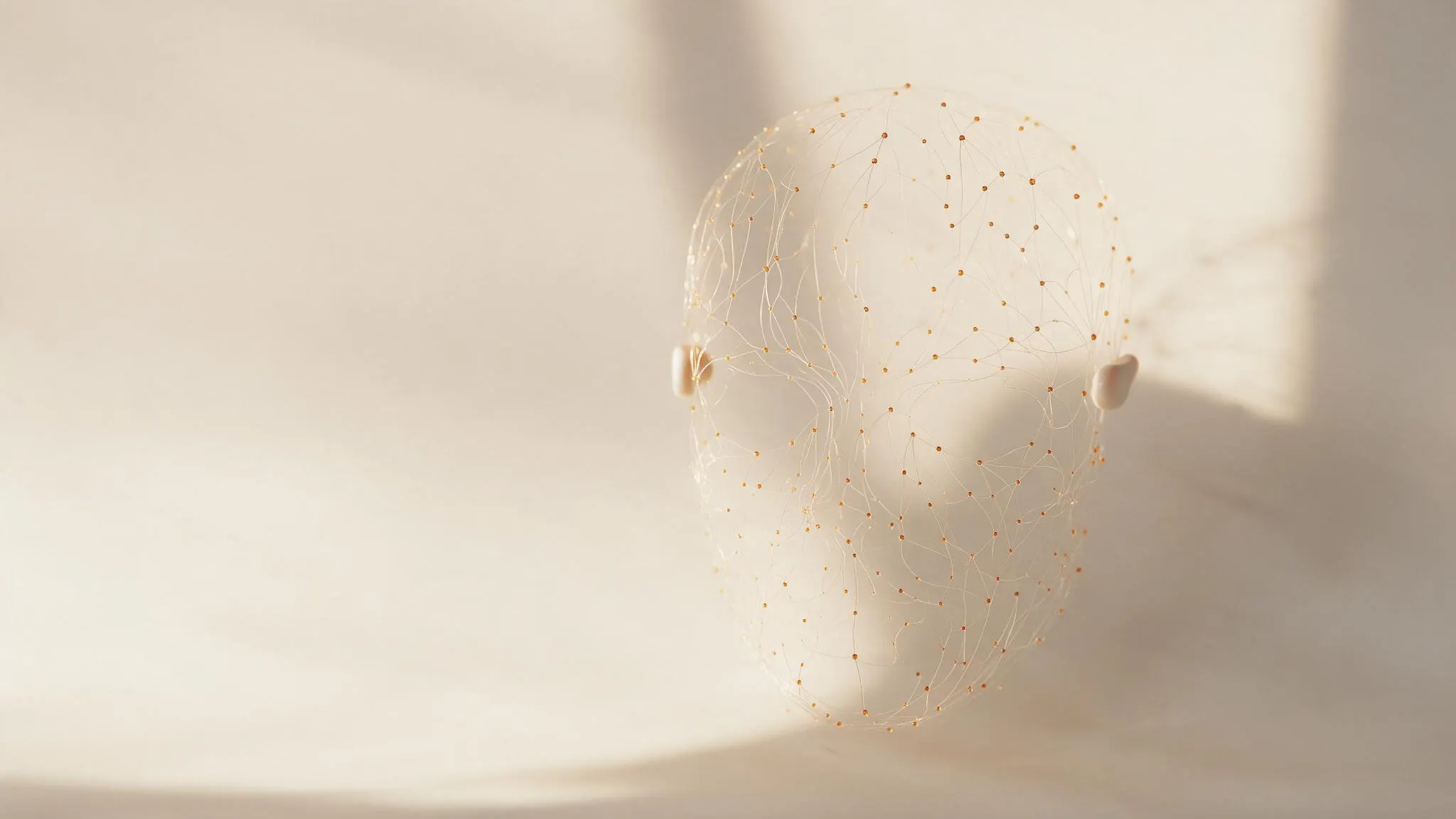
Retrospect 7 · Neural memory interface
Your life, in full.
Retrospect 7 reconstructs the moments that matter most to you, in every sense and in full detail, so you can spend time inside them again. For people in palliative and memory care, fitted by certified clinicians.
Now in 214 care centers across 31 countries
Most of a life is forgotten by the person who lived it. We think that’s worth fixing.
Ommatid, founding principleEvery sense, restored.
Recall is a sketch. Retrospect works from the traces your brain still holds, and rebuilds each moment at the fidelity it was lived: sight, sound, smell, touch and feeling, together.


How it works
Memory, reconstructed.
A memory isn’t stored like a file. It’s rebuilt each time you reach for it, and a little is lost with every rebuilding. Retrospect rebuilds it with you, and restores what time has worn away.
Attune
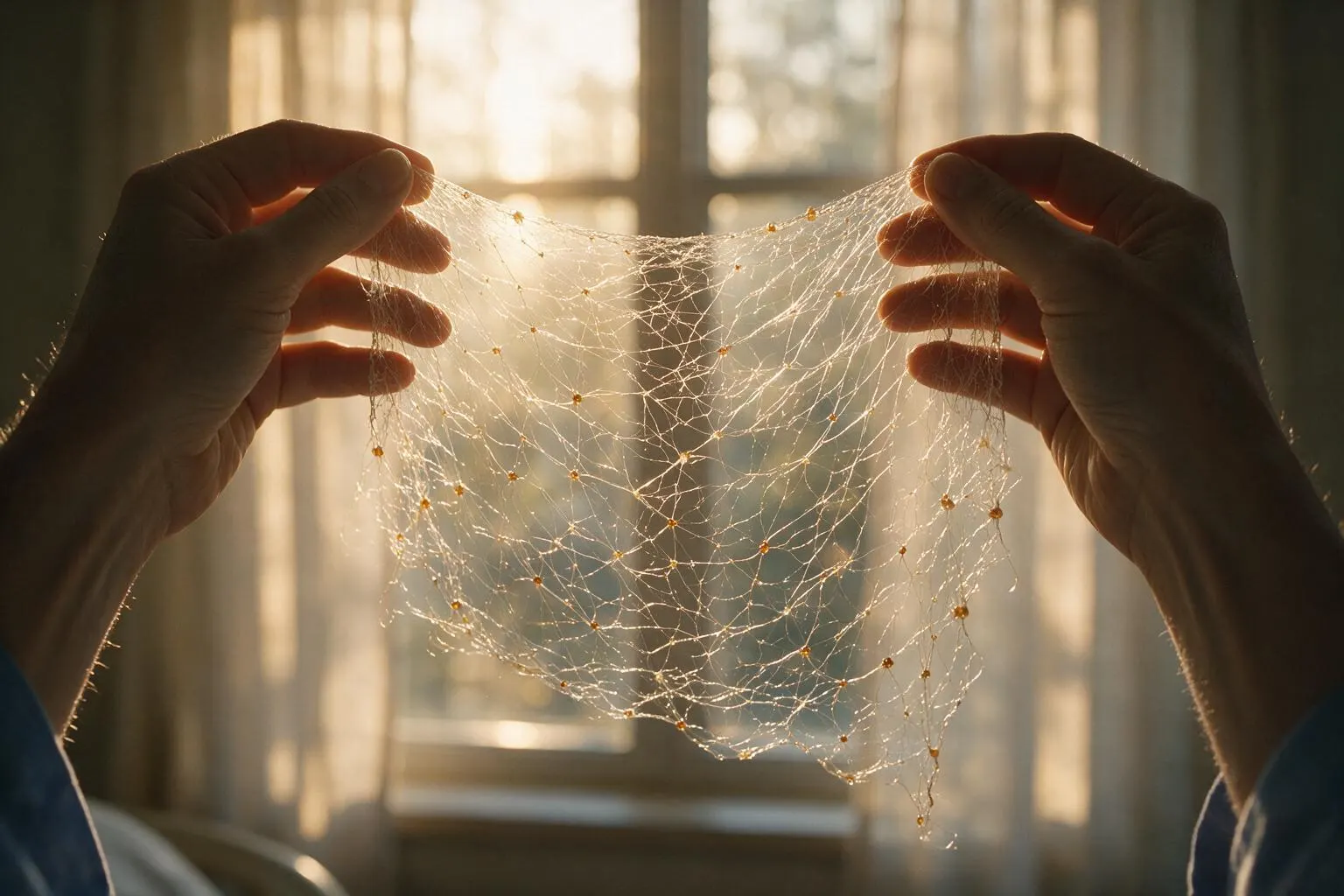
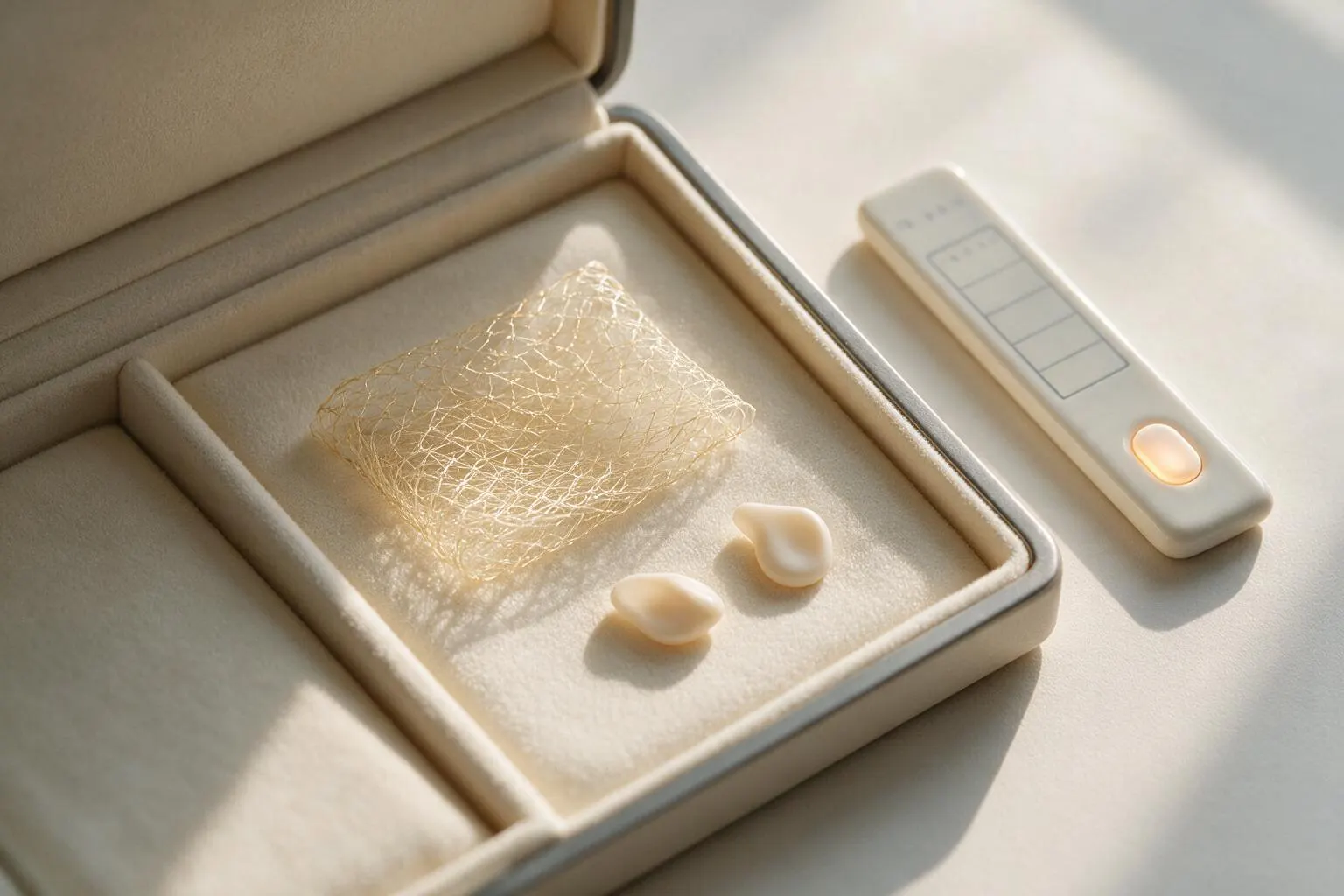
A mesh of 4,096 filament nodes rests lightly on the head, anchored by two ceramic contacts at the temples. In its first minutes it maps the patterns that are yours alone.
Anticipate
It forecasts your brain state a moment ahead: which memory you’re reaching for, and how you’re likely to feel when you arrive.
Reconstruct
It rebuilds the moment from what your brain still holds, restoring faces, rooms, voices and weather at the resolution they were lived.
Complete
Where recall has failed entirely, it composes the most probable version of what was there, drawn from everything around it, and notes it in the session record.
Every moment, chosen for you.
Retrospect never simply plays your past back. It predicts what you’ll feel next, shows you the moment most likely to bring it, watches how you respond, and learns from it, dozens of times a second. The longer you wear it, the better it knows what you were always going to feel.

Outcomes
Comfort, measured.
In our multi-site palliative study, Retrospect sessions were associated with lower distress and more time at peace, for patients and for the people sitting with them.
- 41%
- lower end-of-life distress scores than standard care
- 9 in 10
- families described their loved one’s session as peaceful
- 11 min
- median time to fit and calibrate, at the bedside
For care teams
Given by Guides.
Retrospect is given only by certified Retrospect Guides: clinicians trained in fitting, calibration and comfort care. A Guide stays with the patient for the whole session.
- Calibrated at the bedside
- No implant, no preparation, no sedation. Fitting and calibration take about eleven minutes.
- Paced to the patient
- Retrospect monitors vital signs throughout, and paces every session to the patient’s condition.
- Always in the Guide’s control
- A Guide can pause or end a session at any moment. Patients come back gradually, over about a minute.
- Family welcome
- Loved ones can stay in the room throughout, with the Guide’s notes on screen as the session goes.
“I’ve sat with a great many people at the end of their lives. This is the first thing I’ve seen that gives them somewhere to go.”

Privacy
Your memories stay yours.
What you relive in Retrospect is encrypted on the device and never shown to anyone: not your Guide, not your family, not us. Only what’s needed to keep Retrospect safe and improving ever leaves the room, and never with your name on it.
2,417,368Sessions given
The device
Retrospect 7 NMI
The seventh generation of our neural memory interface, and the lightest yet.
- Interface
- Non-invasive filament mesh, 4,096 nodes
- Contacts
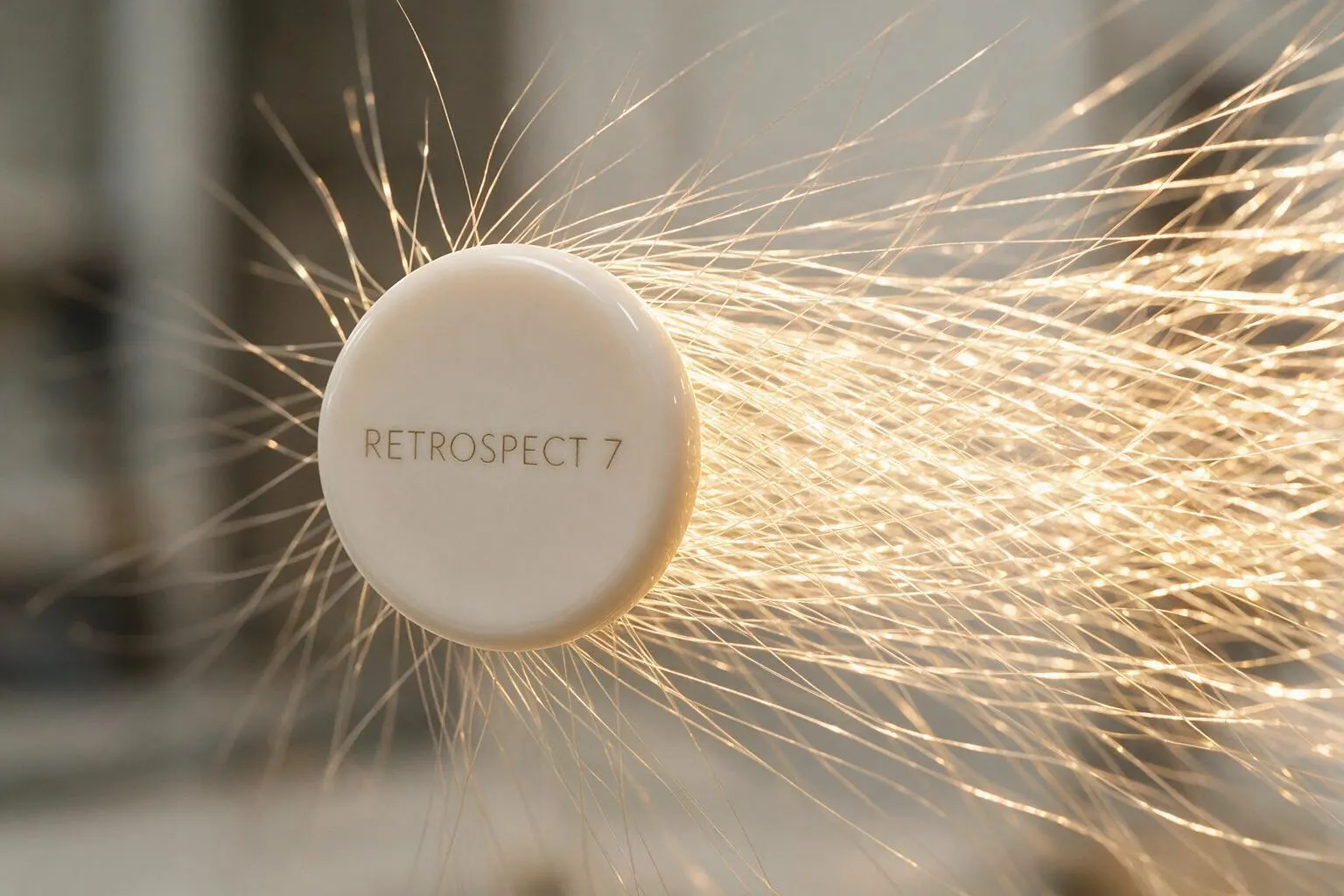
- Two zirconia ceramic temple contacts
- Weight
- 31 g
- Calibration
- About 11 minutes, at the bedside
- Session
- Up to 6 hours
- Senses
- Sight, sound, smell, touch, balance, emotion
- Reconstruction
- Continuous, generative, personal
- Data
- Encrypted on device; de-identified improvement data
- Indicated for
- Palliative and memory care

Our name
It started with a fly.
An ommatidium is a single facet of an insect’s compound eye. Each sees only a sliver of the world; together they make one picture. In 2024, scientists finished the first complete wiring diagram of an adult fly’s brain, nearly 140,000 neurons and more than 50 million connections, and models built from it began to predict what its neurons would do next. We started with one question: if you can predict what a mind will feel, can you help it feel it?
- 2024The first complete wiring diagram of an adult fly brain
- 2029Ommatid is founded, named for the facet of a fly’s eye
- 2031Retrospect 1 reconstructs a single visual memory in a clinical study
- 2034Sound and smell; the first palliative program opens
- 2037Retrospect 5 enters memory care
- 2041Retrospect 7
Selected reading
- Neuronal wiring diagram of an adult brain
Dorkenwald et al., Nature, 2024 - Connectome-constrained networks predict neural activity across the fly visual system
Lappalainen et al., Nature, 2024 - A Drosophila computational brain model reveals sensorimotor processing
Shiu et al., Nature, 2024 - Predicting human brain states with Transformer
Sun et al., arXiv, 2024 - Neural population control via deep image synthesis
Bashivan, Kar and DiCarlo, Science, 2019 - Inception loops discover what excites neurons most using deep predictive models
Walker et al., Nature Neuroscience, 2019 - MindPilot: closed-loop visual stimulation optimization for brain modulation with EEG-guided diffusion
Li et al., arXiv, 2026 - Performative prediction
Perdomo, Zrnic, Mendler-Dünner and Hardt, ICML, 2020
Find a care partner
Ask your care team about Retrospect.
Retrospect is available only through licensed palliative and memory care providers, and given only by certified Guides. Your care team can tell you whether it’s right for you, or for someone you love.
Portland Montréal Mexico City São Paulo Lisbon Edinburgh Oslo Vienna Nairobi Cape Town Mumbai Singapore Seoul Osaka Melbourne Auckland
Back to the top